
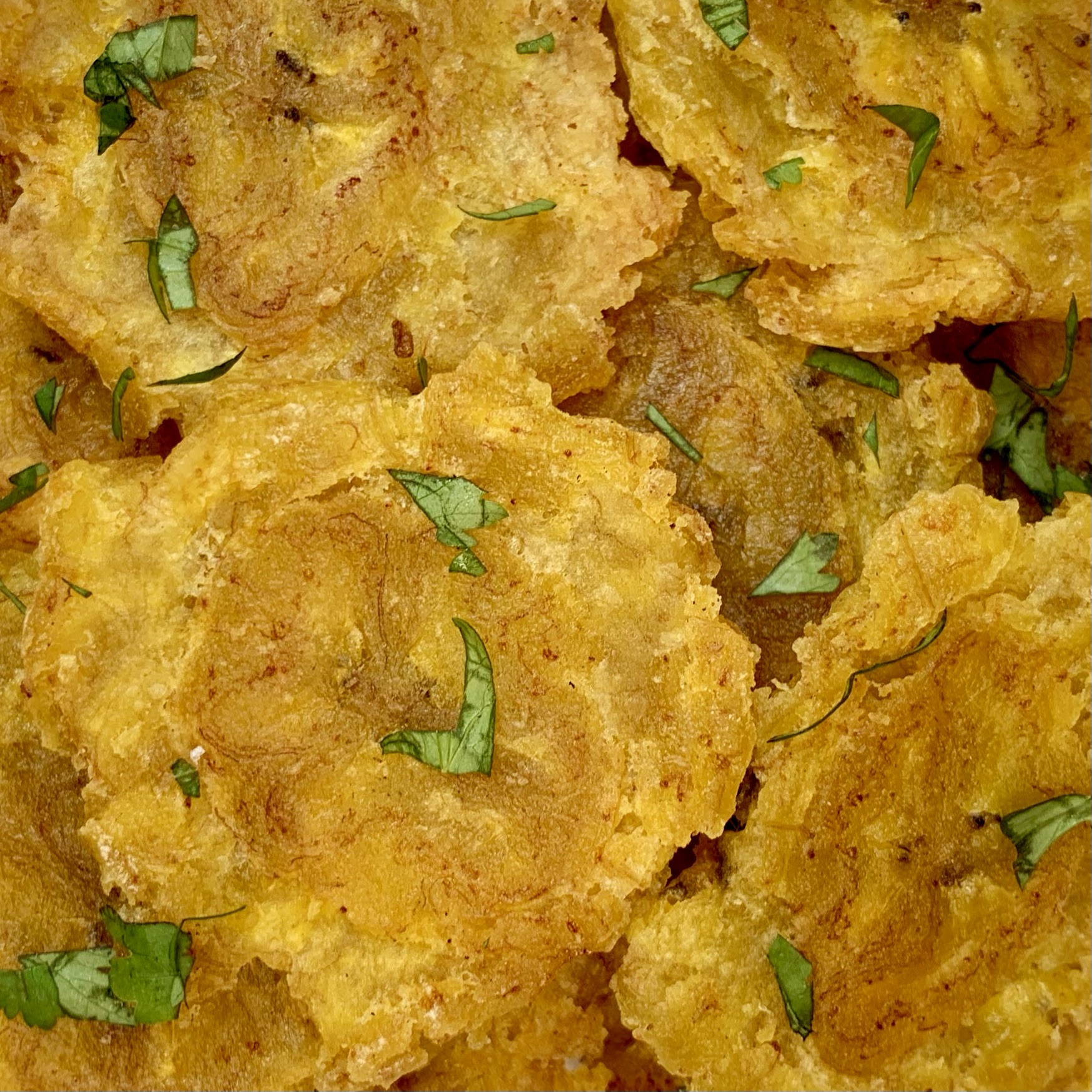
The satisfying crunch of perfectly golden tostones de plátano brings memories of bustling Caribbean kitchens and family gatherings. A good tostones recipe is a staple across Caribbean cuisine. They can be found in the vibrant streets of Puerto Rico and coastal towns in Costa Rica and the Dominican Republic. Much like how french fries have become America’s favorite side, tostones have earned their place as a popular side dish throughout Caribbean cuisine.
The beauty of tostones lies in their simplicity and versatility. Made from green plantains that are sliced, fried, flattened, and fried again, they develop an irresistible crispy exterior while maintaining a tender, starchy center. Whether you’re serving them alongside roasted pork, grilled fish, or simply enjoying them with a sprinkle of salt and garlic, a good tostones recipe elevates any Caribbean plate and transport your taste buds to tropical shores.
More green plantain & tostones recipes:
Did you know you can also make bread from green plantains? Check out my super fast green plantain quickbread recipe, made with fresh green plantains and only four other common ingredients like eggs and baking powder.

Ever tried tostones de pana? For another variety of tostones, check out my recipe for tostones de pana, made with whole breadfruit!

Tostones vs maduros
If you’re not familiar with plantains, they’re a cousin of the banana that can be eaten in it’s green state–as we’ll be doing today as we make this tostones recipe–or in it’s yellow state, which is sweeter and softer than the green version and is often used to make another fried plantain side dish called maduros.
Tostones are made exclusively from unripe green plantains – in fact, you’ll want to choose the greenest plantains you can find at grocery stores for the best results. These unripe plantains are firm and starchy, perfect for creating crispy, flattened plantains we call tostones after being fried a second time. These are what green plantains will look like at the grocery store:

Understanding the difference between tostones vs maduros is essential for any Caribbean cooking enthusiast. While both dishes celebrate the versatile plantain, they showcase completely different stages of ripeness and cooking techniques.
Sweet maduros come from ripe yellow plantains that have developed natural sugars, creating caramelized sweet plantains when cooked. This is what yellow plantains look like at the grocery store.

Throughout Latin American countries and Caribbean cuisines, both preparations are cherished, but tostones require that crucial double-frying process where the plantain slices are pressed flat and returned to hot oil, while maduros are simply sliced and pan-fried once, allowing their natural sweetness to shine through in golden, tender bites.
What is a tostonera?
A tostonera is a press specifically made for making tostones! You won’t need one for this recipe, I’ll provide alternatives below.
Tostoneras are usually made out of two pieces of wood or plastic attached with a hinge, and come with an indented circular spot where you put the plantain chunks as you smash them between each panel. It’s a perfect portable size that you can tuck away in a drawer, and they’re a great addition to your kitchen if you plan to make tostones often. You can buy one here. This is my tostonera:

Can I make this tostones recipe without a tostonera?
Yes you can! I didn’t use a tostonera in this recipe, mostly because I wanted to use dishwasher safe supplies for easy cleanup. There are a lot of different ways to create a plantain press if you don’t have a tostonera on hand.
- If you have a tortilla press, simply line it with parchment paper and smash your plantains as you would smash tortilla dough
- The bottom of a plate, bottom of a glass, or the bottom of a pot also works to smash tostones. You’ll need two surfaces to smash them between. The bottom surface can be a plate or a cutting board, and the top surface is what you’ll press down with to smash the plantain. Simply line both sides with oil to prevent the tostones from sticking to either side, and smash! And choose smooth and flat surfaces without any engravings to prevent your tostones from sticking.
What to eat with tostones de plátano
Ensalada de Pulpo (Puerto Rican Octopus Salad)
For a perfect summer lunch pairing, my ensalada de pulpo recipe comes together super quick, thanks to using pre-cooked octopus tinned in olive oil. This budget-friendly version has octopus with a consistent silky texture due to the tenderizing effect of the olive oil.

Mayoketchup
For a classic Puerto Rican dipping sauce, simply mix mayonnaise with ketchup in a 50/50 ratio and you’ve got a great dipping sauce for your crispy tostones.
Mojo de ajo
Simply boil some fresh crushed garlic cloves with vinegar, water, olive oil, salt and oregano for a delicious mojo de ajo garlic sauce that will go perfectly with your tostones de plátano. Swap the vinegar for lime juice if you’re not a fan of vinegar.
Side dishes
Tostones make a great side dish to almost any food in tropical latin american cuisine.
Try it as a side to skirt steak, also known as churrasco, with rice and beans for a complete meal. Or try it on the side of pollo al ajillo with rice, beans, and avocado for a delicious plate of Puerto Rican food.

Tostones Recipe
Ingredients
- 1 Green plantain.
- Extra virgin olive oil. For frying
- 1 1/2 tsp Sea salt.
- 1/2 cup Hot water. Not boiling
Instructions
I highly recommend scrolling down to the instructions section just below this recipe card for more detailed instructions and step by step photos.
- Peel and chop the plantains into chunks
- Preheat the pan with about 1/4 inch oil in the pan
- Fry the plantain chunks on each side, flipping midway through. Remove them when they're golden brown on both sides.
- Smash the plantain chunks between two oiled plates, or in an oiled tostonera
- Mix the hot water and the salt in a small bowl
- Dip each of the smashed plantains into the hot water mixture for 2-3 seconds. Drain on paper towels.
- Using long tongs and splash guard, return the smashed plantains to the hot oil, cooking them on both sides until they're crispy and golden brown. Remove them from the oil once they're done and drain them on paper towels.
Ingredients for this tostones recipe
Green plantains
You’ll need at least one green plantain to make tostones. One plantain will typically make about 6-10 tostones, depending on what size you cut them.

Oil
You’ll need oil to fry the plantains in for this tostones recipe. I prefer using extra-virgin olive oil and it’s common choice. If you’re worried about the oil smoking (which is a sign your oil is too hot) you can use an oil with a high smoking point like avocado oil. I haven’t tried using vegetable oil or canola oil, but those would also work.
Hot water
You’ll need hot water for the method I use to salt the tostones.
Salt
You’ll dissolve a little salt in the hot water to salt the tostones. I like to use sea salt, but kosher salt or pink salt work too.
How to make this tostones recipe
Step 1: Peel the plantains
Start by chopping off the ends of the plantain on a cutting board. Then make slits down the length of the plantain with a paring knife. Using the knife, carefully push the skin away from the plantain from the slits. Then, peel the skin off the plantain.

Step 2: Chop the plantains
Slice the plantains into thick slices. I like to make them thinner towards the middle since there are more seeds in this area and it’ll help your tostones de plátano stay in one piece while they’re frying.

Step 3: Preheat your pan
Preheat a wide pan with tall edges over medium heat. Add about 1/4 inch of oil to the pan to heat up. If you use any less oil, you’ll probably run out as you’re cooking. Just make sure there’s at least a couple of inches of space between the top of the oil and the top of the pan to prevent it from splashing.
Tostones are also commonly made in deep fryers, so that’s an option if you prefer to use one, but I usually use a pan.
Step 4: Cook the plantains
Once the oil is hot but not smoking, carefully add the sliced plantains to the hot oil in a single layer for their first fry with long tongs. As soon as you add them to the pan, wiggle each of the thick rounds around for 3-5 seconds with the long tongs. This will prevent them from sticking, especially if you’re not using a nonstick pan.
If you notice the oil disappearing at any point, just add more until you have enough oil, about 1/4 inch.

Step 5: Flip the plantains
To make sure they cook on both sides, flip the the plantain chunks once the bottom side is golden brown.

Step 6: Remove the plantains from the pan
Once both sides of the plantains are golden brown, remove them from the oil with a slotted spoon, and drain away any excess oil by placing them on paper towels.

Step 7: Make the salted water mixture
The way I make this tostones recipe, I salt them with salted water. This will help the salt infuse deeper into the tostones instead of salting them at the end.
Mix the hot water with the salt. If it looks like a lot of salt, don’t worry! A lot of it will stay in the water and wont end up on your plate.
Step 8: Smash the plantains
Using a tostonera, or smashing between two flat surfaces as I’m doing here, line both sides of where you plan to smash the plantain chunks with oil to prevent the smashed plantains from sticking. Place a plantain chunk between the two surfaces and press down to smash it thin.
Repeat this oiling and smashing process for the rest of the plantain chunks.


Step 9: Salt the tostones
Soak each of the tostones in the hot water mixture for 2-4 seconds. You can optionally drain them on paper towels again to prevent the oil from popping when you place them back in the pan.

Step 10: Fry the tostones again
For the second fry, carefully place the tostones back into the hot oil. Be very careful since the water in the tostones can cause the oil to splatter which is potentially dangerous. I recommend using a splash guard and long tongs to prevent injury. Using the long tongs, wiggle the tostones as they’re placed back in the pan to prevent them from sticking.

Flip them once they’re golden brown and crispy on the bottom, wiggling them again as you flip them. Then remove them and drain them on paper towels once they’re crispy on both sides.

How to store your tostones de plátano
Store any leftover tostones in an airtight container in the refrigerator for 3-5 days. I reheat them in the oven on an oven-proof baking dish by baking them at 350 degrees F for a few minutes until they’re sizzling and crispy again, usually 5-10 minutes.
Leave a Reply